The best wellness programs for manufacturing employees and shift workers bring wellness to where employees already are. That means short, hands-on activities during breaks, stretches built around the physical demands of the job, a mix of in-person and virtual sessions, shared workshops for smaller locations, and programs that include employees’ families.
Recently, I asked an HR director about some of the biggest challenges she faces when planning corporate wellness programs. Her answer was one I hear in different ways from HR professionals: How do you reach an entire workforce when employees work in completely different environments and have very different schedules?
She described how easy it can be to organize a health fair, cooking demonstration, or wellness presentation for employees at headquarters. But what about the people working 10-hour shifts in the field? Some have limited break time, no designated computer, and very little opportunity to step away from their responsibilities for a wellness activity.
Are we designing wellness programs for the entire workforce, or primarily for the employees who are easiest to reach?
Key takeaways
- Different employee populations need different wellness approaches.
- Use break time well: short demonstrations and job-specific stretches.
- Give employees take-home guides designed around the physical demands of their jobs.
- Start in person, then continue virtually to make ongoing programs affordable.
- Small companies can share one workshop through cooperative wellness.
- Family wellness workshops extend healthy habits beyond the workplace.
Why do manufacturing employees need a different wellness approach?
Several years ago, I worked with a company that manufactured houses and rooftops. My role included working with management at headquarters as well as the employees on the factory floor.
It quickly became clear that these two populations needed different approaches. Management had different schedules, work environments, and opportunities to participate than the employees working on the production floor.
For the factory employees, I needed to be creative.
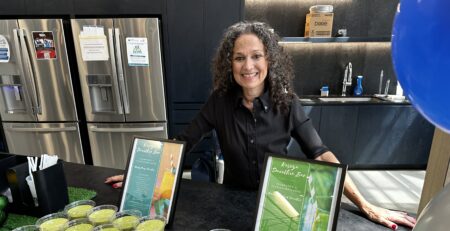
During an after-lunch break, I would set up a beautiful table with fresh ingredients and demonstrate how to make a smoothie. As I added each ingredient, I explained its nutritional value and why I had chosen it. Then came the best part: everyone got to sample it! I also provided printed copies of the recipes so employees could take them home and try making the smoothies themselves.
During lunch breaks, I offered short stretching demonstrations. But these weren’t random stretches pulled from a fitness routine. I had spent time observing the employees, watching the movements their jobs required, and listening to their physical complaints. I selected movements specifically to address the areas of discomfort and repetitive patterns I had observed.
One lunchroom brought together approximately 50 employees. Most became curious about what I was doing and joined in. Some even told me they felt better afterward.
How can wellness education continue after the workshop?
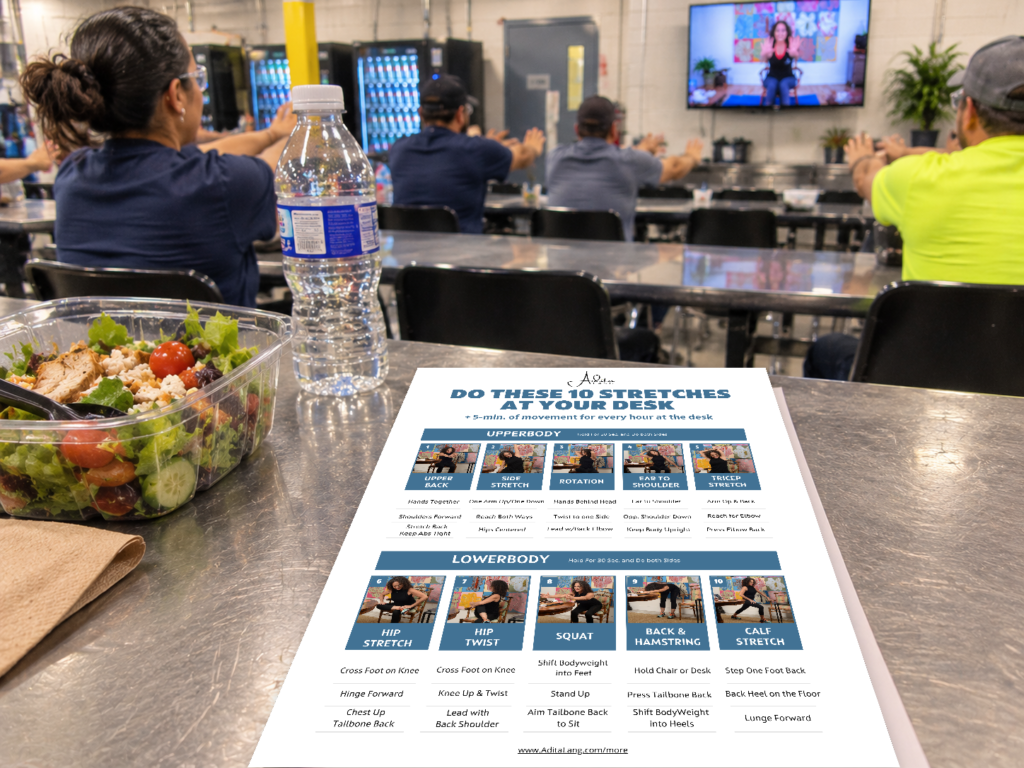
What if employees could take home something specifically designed around the physical demands of their jobs?
If a workforce spends hours lifting, bending, standing, or performing repetitive movements, a wellness professional can create customized educational handouts with appropriate stretches and movement suggestions that relate to those daily activities.
Imagine an employee being able to refer to a simple, easy-to-follow guide that addresses the kinds of physical demands they experience at work. Instead of handing everyone the same generic wellness brochure, give employees information they can actually relate to and use.
That way, the education doesn’t end when the workshop does.
You don’t always need more time from employees. Sometimes you need a better way to use the time they already have.
Do hybrid wellness programs work for field and shift employees?
One of the things that made this program particularly successful was combining in-person and virtual experiences.
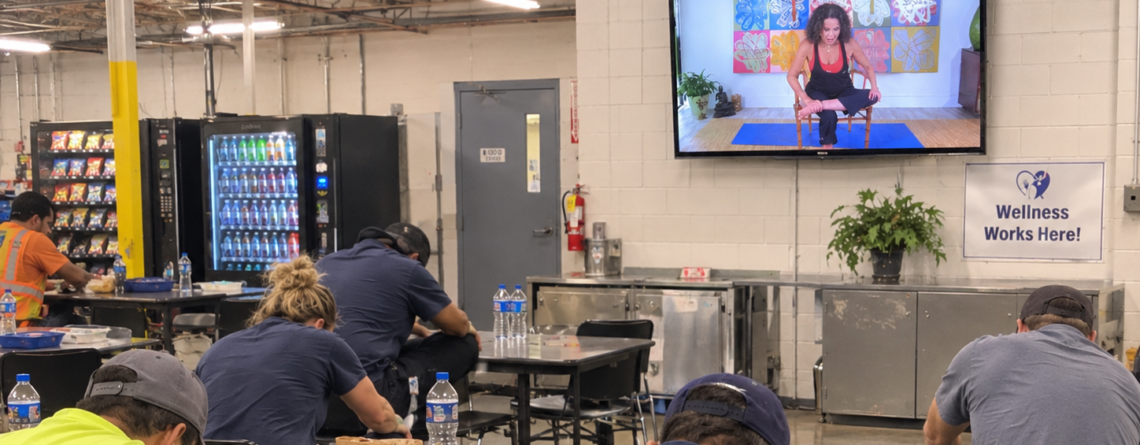
I would introduce the stretching activities in person, build relationships with the employees, and then continue offering classes virtually on the television in the lunchroom.
Once employees have met you, interacted with you, and developed a connection, they’re much more likely to feel comfortable participating in a virtual class. You’re no longer just a face on a screen. You’re someone they know.
This hybrid approach also made it more financially feasible for the company to offer ongoing programming without requiring an instructor to be physically present every time.
Virtual programming doesn’t have to replace the personal connection. It can build on it.
How can small companies afford wellness programs?
Another challenge the HR director mentioned was finding vendors willing to serve smaller locations. Some have as few as 20 employees, while vendors may require participation minimums that make those programs difficult to coordinate.
But what if companies stopped thinking about wellness as something they had to organize independently?
Imagine four smaller companies in the same area sharing the cost of one wellness workshop. Each company gets access to a valuable experience, but the expense is divided among the participants. I call this a cooperative approach to wellness.
Companies don’t need to be competitors to share a wellness resource. HR directors may already know colleagues at nearby businesses who face the same challenges. A shared workshop could cover stress management, nutrition, movement, sleep, or another topic that benefits everyone.
There’s no reason every company needs to reinvent the wheel or pay for an entire program on its own.
Should corporate wellness programs include employees’ families?
For employees working demanding shifts, a longer wellness presentation during the workday may simply not be realistic. But what about a once-a-month family wellness workshop on a Saturday morning?
It could be a cooking experience, a movement class, a stress-management workshop, or another enjoyable activity that employees can share with their partners and children.
An employee learns something new, enjoys the experience with family, and takes those ideas home. The conversation about healthier habits continues long after the workshop ends.
The ultimate goal is to support a healthier employee. And the people and habits surrounding that employee at home are part of the picture.
Wellness shouldn’t have to stop at the workplace door.
Questions HR should ask before planning wellness for different employee groups
Before planning the next round of wellness activities, take a closer look at the different employee populations in your organization:
- Where do these employees work?
- What does a typical workday look like?
- When do they realistically have time to participate?
- Do they have access to computers or company communication platforms?
- What physical or mental demands are part of their jobs?
- Could a combination of in-person and virtual programming work?
- Are there opportunities to involve families or collaborate with nearby businesses?
And, perhaps most importantly, have you asked employees what would actually be useful to them?
A wellness program designed around a headquarters employee sitting at a desk may look very different from one designed for someone working on a factory floor. Neither is more important. They simply have different needs.
Make wellness work for everyone
A successful corporate wellness program doesn’t have to mean a packed health fair, a long presentation, or a calendar filled with activities.
Sometimes it’s a smoothie demonstration that gets employees curious about nutrition. Sometimes it’s a few stretches that address the physical demands of their jobs. Sometimes it’s a virtual class that builds on an in-person relationship. And sometimes it’s bringing families or neighboring businesses into the experience.
The opportunity is to stop asking employees to fit into the wellness program and start asking how the wellness program can fit into their lives.
Because the employees who have the least time to participate in wellness may be the very employees who need us to bring it to them.
What’s your biggest wellness challenge? Reaching field employees, working within a budget, or getting employees engaged? Explore my Corporate Wellness Programs and book a free strategy session to create programming that works for your whole workforce.
About Adita Lang
Adita Lang is a corporate wellness speaker, educator, and program creator based in South Florida, with more than 40 years of experience in health, fitness, and wellness. Since 2012, she has worked with hundreds of companies, with audiences from 10 to 2,000+, both in person and virtually. She holds a BS in Holistic Nutrition and certifications from ACE, ACSM (Exercise is Medicine), and the Check Institute, and was recently featured in Voyage MIA.









Leave a Reply