An effective corporate wellness program starts with the employees, not the health calendar. It uses conversations, like health coaching, to learn what employees need, builds programming around those needs, teaches practical skills people can use in real life, and keeps adjusting as needs change.
After decades of working in health, fitness, and wellness education, I’ve seen a lot of approaches to helping people live healthier lives. I’ve worked with individuals, taught classes, presented to corporate audiences, and helped organizations bring wellness education to their employees.
One thing I’ve learned is that providing wellness education and creating a program that truly engages employees are two very different things.
I’ve seen companies put together a calendar of monthly health topics, schedule a presentation, promote it to employees, and consider the job done. February is Heart Health Month, so let’s talk about heart health. October is Breast Cancer Awareness Month, so let’s schedule a presentation.
There’s nothing wrong with these topics. They’re important, and health observances can be a great way to introduce valuable information. But here’s my question: Are we choosing topics because they’re what employees need and want to learn about, or because they’re next on the calendar?
Key takeaways
- Start with health coaching conversations to discover what employees actually need.
- Use the health observance calendar as a resource, not the whole plan.
- Teach the “how,” not just the “why,” so information turns into habits.
- One consistent wellness professional builds trust that rotating presenters can’t.
- Support onsite gyms with Gym 101 classes and a simple equipment guide.
- Revisit the program at six months and adjust.
Why should a wellness program start with employee conversations?
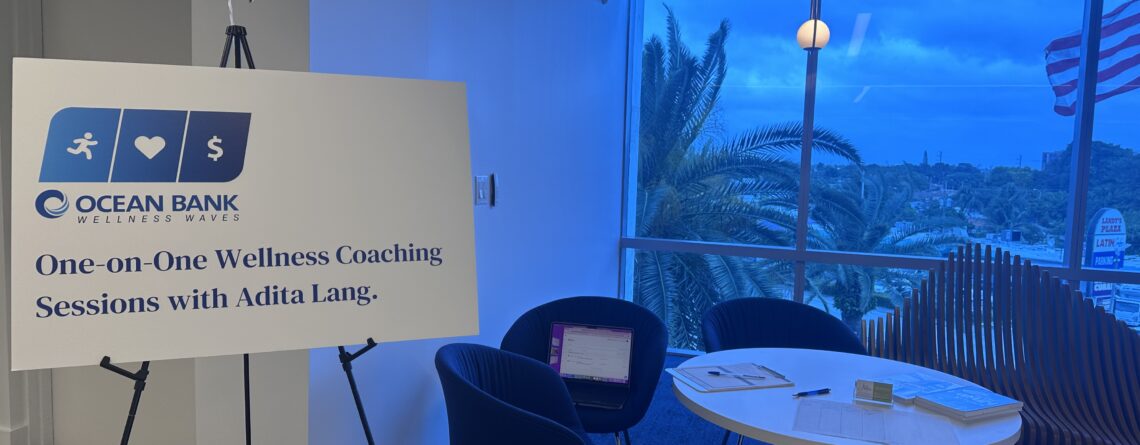
If I were designing an ideal corporate wellness program, one of my first steps would be to offer employees the opportunity to participate in health coaching.
There’s something valuable about sitting down with an actual person and having a conversation about your health. When someone has the opportunity to talk through their goals, challenges, frustrations, and questions, they may share things that would never make it onto a questionnaire.
A questionnaire can tell you someone wants to improve their health. A conversation might help you discover why they haven’t been able to do it yet.
Imagine meeting with three employees. One wants to lose weight. Another struggles with self-confidence and anxiety. The third wants to improve their general health, knows what they should be doing, but just can’t seem to get started.
On the surface, these appear to be three very different situations. But as a wellness professional, I would be looking for common threads. Could stress be contributing to all three challenges? Could a lack of movement be affecting their energy, mood, and motivation?
Those conversations might reveal that stress management and getting more active are two areas that could benefit many employees, not just the three people I met with. Instead of simply scheduling the next topic on the health calendar, I might recommend stress-management classes, short mindful moments throughout the workday, and Fitness 101 sessions.
Of course, I wouldn’t assume every employee has the same underlying challenges. That’s precisely why the conversations matter. The goal is to identify common themes while respecting individual needs.
This is where health coaching becomes more than an individual benefit. It becomes a way to help shape the entire wellness program.
What is a corporate wellness program supposed to accomplish?
The goal isn’t to fill a calendar with presentations or see how many employees we can squeeze into a virtual meeting. It’s to inspire people to develop healthier habits that help them feel better, become stronger, manage stress, sleep well, and enjoy life outside the workplace.
From an employer’s perspective, healthier habits may also contribute to fewer sick days and a healthier, more productive workforce. We can’t promise those results, because health is influenced by many factors. But we can give employees practical tools and encouragement to make healthier choices.
Here’s where some programs miss the mark: telling people what they should do isn’t the same as helping them figure out how to do it.
We all know exercise is good for us. We know vegetables are generally a better choice than a box of cookies for dinner. And most of us know we should get more sleep. (If knowing were enough, we’d all be getting eight hours and doing push-ups before breakfast!)
The goal isn’t simply to educate the workforce. It’s to inspire healthier habits by making those habits feel achievable.
Should you plan wellness around the health observance calendar?
I understand why companies rely on health observance calendars. They’re convenient, provide structure, and make it easy to plan programming throughout the year. HR professionals already have plenty on their plates, and a calendar offers a straightforward place to start.
But this approach can turn wellness into a series of disconnected events. One month, employees attend a presentation about heart health. The next month, the topic is nutrition. A few months later, there’s a session about stress management. Each presentation may be informative, but there’s often little connection between them and no clear plan for helping employees put what they’ve learned into practice.
February rolls around, hearts are everywhere, and suddenly we’re all talking about cardiovascular health. Important? Absolutely. But what if employees are losing sleep over stress or struggling to find the energy to get through the day?
My approach is to use the health calendar as a resource, not a roadmap. If a topic aligns with employee interests, wonderful. If employees are asking for help with something else, that deserves consideration, too.
Wellness programming should respond to people, not just dates on a calendar.
How do you make wellness information useful in real life?
Knowing what to do and actually doing it are two very different things.
Telling employees that exercise is important doesn’t necessarily help someone who spends ten hours a day at a desk figure out how to incorporate movement into a demanding schedule. Explaining the importance of healthy eating doesn’t help much if the suggestions are too expensive, require unfamiliar ingredients, or involve kitchen equipment someone doesn’t own. And telling people to reduce stress is easy. Helping them do it in the middle of a hectic workday is much more useful.
Wellness education should explain not only why something matters, but also how to make it happen. That might mean teaching employees simple stretches they can perform at their desks, showing them how to build balanced meals with accessible ingredients, or offering practical strategies for improving sleep.
Telling a busy employee to cook every meal from scratch is lovely in theory. So is having a personal chef! Let’s work with reality.
Why does one consistent wellness professional build more trust?
Imagine an employee who has a health coaching conversation with someone who takes the time to understand their goals and challenges. A few weeks later, that same person leads a class on stress management or fitness. The employee already recognizes them and has begun building trust.
Now, when a question comes up, reaching out feels much more comfortable. It also gives the wellness educator a better understanding of the workforce and helps connect individual conversations with broader programming needs.
Bringing in specialists for certain subjects can be wonderful, too. But there’s real value in having one consistent wellness professional who understands the program, gets to know the employees, and leads many of the classes.
For example, a series of short, 15-minute weekly Stretch & Learn sessions can teach employees simple desk stretches while introducing small, practical health tips. Over time, employees become familiar with the format and know they’ll leave with something they can use.
Variety is valuable, but so is connection. And trust takes time to build.
How do you get employees to use the company gym?
Organizations can invest a substantial amount of money in building and equipping an onsite gym, only to find that a handful of employees actually use it.
Sometimes the problem isn’t the equipment, the location, or even employees’ interest in exercise. It’s that people don’t know what to do once they walk into the room. They may not know how to adjust the machines, which exercises to perform, how much weight to use, or whether they’re doing an exercise correctly. Rather than risk feeling uncomfortable or embarrassed, they avoid the gym altogether.
Let’s face it: nobody wants to be the person walking aimlessly in circles around the gym, having no idea where to start.
If a company has invested in a fitness facility, I’d love to see that investment supported with introductory Gym 101 classes. I’d also recommend a simple, employee-friendly guide customized to the facility, with photos of the actual equipment and basic setup instructions.
The equipment is already there. Sometimes all that’s missing is a little guidance and confidence.
Why revisit your wellness program at six months?
In my ideal world, health coaching wouldn’t end after the initial conversations. I’d bring employees back for follow-up coaching about six months into the program.
Are employees feeling more energized? Have they made progress toward their goals? Are they exercising more consistently, sleeping better, or finding healthier ways to manage stress? What has been difficult to maintain? What additional support would help?
I’d also want to know whether the original programming addressed the right issues. Perhaps stress-management classes were well received, but employees are now asking for more help with nutrition. Those conversations help fine-tune the programming for the second half of the year, while recognizing that these observations don’t prove the program alone caused any changes.
A wellness program shouldn’t be something we design in January, deliver all year, and evaluate only by counting attendance. It should be an ongoing process of learning, adjusting, and improving.
How can a wellness partner make it easier for HR?
HR professionals may be responsible for benefits, recruitment, retention, compliance, and countless other priorities. A good wellness partner should help with more than delivering presentations.
A good partner can use insights from health coaching to recommend relevant topics, organize programming throughout the year, coordinate activities, and adjust the plan as employee needs evolve.
The company doesn’t have to offer everything at once or spend an unlimited amount of money. A thoughtful program can start small and grow over time. What matters is having a reason behind the choices rather than simply checking off another wellness activity.
My vision for an effective corporate wellness program
After all these years, I believe the best approach is also one of the most logical: get to know the employees, understand their needs, build programming around what matters to them, and keep adapting as those needs change.
A well-designed program won’t guarantee that every employee attends every session or that absenteeism will automatically decline. But when employees have a voice in the process and see that the information is relevant to their lives, there’s a better reason for them to participate.
Corporate wellness shouldn’t be about how many presentations a company delivers or how many boxes it checks on a calendar. It should be about helping people understand their health, giving them practical tools, and making healthier choices feel more achievable.
Ready to build a wellness program your employees will actually use? Explore my Corporate Wellness Programs or book a free strategy session.
About Adita Lang
Adita Lang is a corporate wellness speaker, health coach, and author based in South Florida, with more than 40 years of experience in health, fitness, and wellness education. Since 2012, she has worked with hundreds of companies, with audiences from 10 to 2,000+, including virtual presentations in several countries. She holds a BS in Holistic Nutrition and certifications from ACE, ACSM (Exercise is Medicine), and the Check Institute, and was recently featured in Voyage MIA. Her programs are built around four pillars: Exercise & Movement, Food & Nutrition, Sleep & Relaxation, and Happiness.





Leave a Reply